11 May 2008
Posts and Pic's Period Three
# posted by Henry @ 9:46 AM 
Comments:
<< Home
Grassland are generally semi-arid areas with little or no trees, and are inhabited by grazing mammals, ground-nesting birds, insects, and a few species of reptiles.they are
humid and are densely covered in tall grass. they animal life includes grazing animals like cows.
Click Here
humid and are densely covered in tall grass. they animal life includes grazing animals like cows.
Click Here
# posted by  : Mon May 12, 08:43:00 PM
: Mon May 12, 08:43:00 PM
Grassland are generally semi-arid areas with little or no trees, and are inhabited by grazing mammals, ground-nesting birds, insects, and a few species of reptiles.they are
humid and are densely covered in tall grass. they animal life includes grazing animals like cows.
One SYMBIOSIS realitionship isv between humans and prairie dogs. The prairie dog usally chases away smaal rodents and sometimes deer and other animals. Click Here
humid and are densely covered in tall grass. they animal life includes grazing animals like cows.
One SYMBIOSIS realitionship isv between humans and prairie dogs. The prairie dog usally chases away smaal rodents and sometimes deer and other animals. Click Here
# posted by : Tue May 13, 02:20:00 PM
: Tue May 13, 02:20:00 PM
1.Taiga are range from -58 F to 86 F. The annual rain fall is 200 to 750 mm. It is characterized by coniferous forests.
2.There is the Bald Eagle and the pine tree. The eagle uses the tree as a place for nests. this is Commensalism
3.The tree doesn't gain anything or lose anything and the eagle gains a home and shelter.
4.
Eagle sitting on tree.
2.There is the Bald Eagle and the pine tree. The eagle uses the tree as a place for nests. this is Commensalism
3.The tree doesn't gain anything or lose anything and the eagle gains a home and shelter.
4.
Eagle sitting on tree.
# posted by : Tue May 13, 03:05:00 PM
: Tue May 13, 03:05:00 PM
1. Tropical Rainforests are found close to the equator. There is a relatively warm temperature. They receive rainfall regularly throughout the year (80-400 inches per year). It remains warm and frost free all year long (mean temperatures are between 70 F and 85 F). with very little change. The decomposition rate is very rapid, and the trees live anywhere from 50 to 100 years.
2. The Chimpanzee relies on its group/family to help with certain hygenic things(Parasitism). Chimps in zoos arent really benefitting from being in a zoo. They miss their outside world but they are satisfied with the zoo environment (commensalism). Chimps and humans benefit from eachother. Humans can learn new things about the animal and chimps are used in scientific studies, and chimps can learn new actions from humans(mutualism).
3. Both the human and the chimpanzee benefit from their relationship.
4. MAN AND CHIMP
2. The Chimpanzee relies on its group/family to help with certain hygenic things(Parasitism). Chimps in zoos arent really benefitting from being in a zoo. They miss their outside world but they are satisfied with the zoo environment (commensalism). Chimps and humans benefit from eachother. Humans can learn new things about the animal and chimps are used in scientific studies, and chimps can learn new actions from humans(mutualism).
3. Both the human and the chimpanzee benefit from their relationship.
4. MAN AND CHIMP
# posted by : Tue May 13, 07:34:00 PM
: Tue May 13, 07:34:00 PM
Deciduous Forests are located in the eastern half of North America and Middle Europe. The temperature is 50 degrees on average. They get 30 to 60 inches of rain per year. It has five different zones, 4 distinct seasons, and in the winter animals hibernate. I chose Bees and Flowers. A symbiotic relationship between them is the bee takes pollen from flower and the flower needs the bee to reproduce. Neither are hurt in this relationship. The flower is aided by it. The bee is unaffected.
Bee on Flower
Bee on Flower
# posted by : Wed May 14, 03:23:00 PM
: Wed May 14, 03:23:00 PM
Deciduous Forests are located in the eastern half of North America and Middle Europe. The temperature is 50 degrees on average. They get 30 to 60 inches of rain per year. It has five different zones, 4 distinct seasons, and in the winter animals hibernate. I chose Bees and Flowers. A symbiotic relationship between them is the bee takes pollen from flower and the flower needs the bee to reproduce. Neither are hurt in this relationship. The flower is aided by it. The bee is unaffected.
Bee on Flower
Bee on Flower
# posted by : Wed May 14, 03:23:00 PM
: Wed May 14, 03:23:00 PM
The Tropical Rainforest biome is found mostly around the equator. It includes portions of South and Central America, Central Asia, Australia, and Africa. It has extremely humid conditions with temperatures around 25 degrees Celsius all year, and about 200cm of rainfall per year. Because of this, there is great amounts of wildlife and plant growth, some of which forms the giant canopy rainforests are known for.
Sloths and algae are animals that have a mutualism relationship. Sloth hairs are grooved, which allows algae to easily take hold and grow on the sloth's fur. This camouflages the sloth and allows the algae to get closer to the sunlight. Both animals benefit from this interaction.
Sloth
Algae
Sloths and algae are animals that have a mutualism relationship. Sloth hairs are grooved, which allows algae to easily take hold and grow on the sloth's fur. This camouflages the sloth and allows the algae to get closer to the sunlight. Both animals benefit from this interaction.
Sloth
Algae
# posted by : Thu May 15, 08:53:00 AM
: Thu May 15, 08:53:00 AM
A Hot and Dry Desert is, as you can tell from the name, hot and dry. Most Hot and Dry Deserts don't have very many plants. They do have some low down plants though. The only animals they have that can survive have the ability to burrow under ground. This is because they would not be able to live in the hot sun and heat. They only come out in the night when it is a little cooler.All months have average temperatures over 64° F.
The senita moth and the senita cactus are found in the Sonoran desert of southern Arizona and northern Mexico. They have a mutual and parasitic relationship. The moth pollinates the cactus and then lays its eggs in the cactus for protection. That is the mutual part. But when the moths hatch they eat the flowers of the cactus and destroy it.
They help each other at first but in the end the moth benefits more.
senita moth and senita cactus
The senita moth and the senita cactus are found in the Sonoran desert of southern Arizona and northern Mexico. They have a mutual and parasitic relationship. The moth pollinates the cactus and then lays its eggs in the cactus for protection. That is the mutual part. But when the moths hatch they eat the flowers of the cactus and destroy it.
They help each other at first but in the end the moth benefits more.
senita moth and senita cactus
# posted by : Thu May 15, 02:50:00 PM
: Thu May 15, 02:50:00 PM
desert
1- it has ver little rain fall,up to 113 degrees f in daytime and at night 32 degrees c
2-In their symbiotic relationship with the cyanobacteria, the cycad provides a home for the algae, and the algae provide extra nutrients for growth.
3-
http://bluegreenalgaefacts.com/images/aphanizomenoninch.jpg
http://www.aspca.org/toxicplants/images/TN_IMG01447_300X300Y.jpg
1- it has ver little rain fall,up to 113 degrees f in daytime and at night 32 degrees c
2-In their symbiotic relationship with the cyanobacteria, the cycad provides a home for the algae, and the algae provide extra nutrients for growth.
3-
http://bluegreenalgaefacts.com/images/aphanizomenoninch.jpg
http://www.aspca.org/toxicplants/images/TN_IMG01447_300X300Y.jpg
# posted by : Thu May 15, 08:35:00 PM
: Thu May 15, 08:35:00 PM
There are two types of rain forests, the temperate and the tropical. They are both rich in plant and animal species. Montane forests have plants, such as oaks and pines and are found in mountainous areas. The tropical rain forest has a warm temperature and the temperate has cool. The tropical rainforest receives about 80-400 inches of rain a year. The temperate receives 100 inches per year. Another fun fact is that the tropical rain forest contains broadleaf leaves and the temperate contains needless leaves.
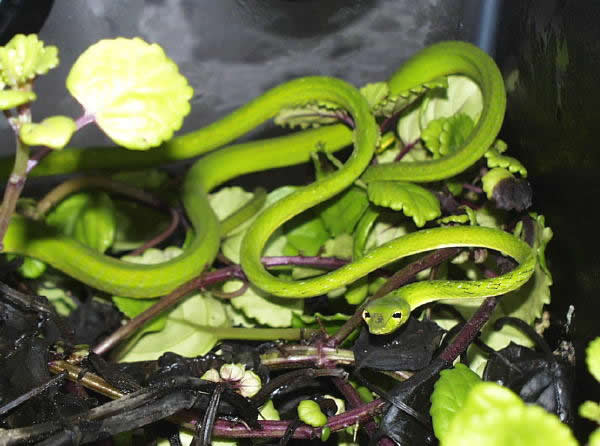
I chose the vine snake and the lizards as my example. The vine snake eats the birds, therefore only one benefits and the other is completely hurt. This is an example of parasitism. The vine snake is aided and the lizard is hurt.
vine snake
lizard
I chose the vine snake and the lizards as my example. The vine snake eats the birds, therefore only one benefits and the other is completely hurt. This is an example of parasitism. The vine snake is aided and the lizard is hurt.
vine snake
lizard
# posted by : Fri May 16, 02:35:00 PM
: Fri May 16, 02:35:00 PM
The temperature in a tropical rainforest rarely gets higher than 93 degrees Fahreinheit or drops below 68 degrees fahreinheit. There is an average of 50-260 inches of rainfall per year and there is usually more than 100 inches per year. Rainforests belong to the tropical wet climate group. TRopical rainforests can be found in central America, Africa, and Indo-Malaysia. About 1/4 of medicines we use come from tropical rainforest plants.
An example of commensalism is a barnacle and the shell of a scallop. The barnacle gets a place to stay, and the shell is unaffected.
Scallop
Barnacles
An example of commensalism is a barnacle and the shell of a scallop. The barnacle gets a place to stay, and the shell is unaffected.
Scallop
Barnacles
# posted by : Fri May 16, 02:57:00 PM
: Fri May 16, 02:57:00 PM
A desert is a a landscape form or region characterized by exceedingly low rainfall and sparse vegetation. They usually have a large diurnal and seasonal temperature range, with high daytime temperatures (in summer up to 45 °C or 113 °F), and low night-time temperatures (in winter down to 0 °C; 32 °F) due to extremely low humidity. Deserts can be defined as areas that receive an average annual precipitation of less than 250 mm (10 in) or as areas in which more water is lost than falls as precipitation.
A symbiotic relationship in the desert is between cycads and cyanobacteria. The cycad provides a home for the cyanobacteria, and they provide extra nutrients for the cycad's growth. (Both organisms benefit)
Cycad
Cyanobacteria
A symbiotic relationship in the desert is between cycads and cyanobacteria. The cycad provides a home for the cyanobacteria, and they provide extra nutrients for the cycad's growth. (Both organisms benefit)
Cycad
Cyanobacteria




Taiga is the Russian word for forest and it is the largest biome in the world. The taiga is in north america and eurasia, located in the north below the tundra. Winters in the taiga are cold and always snowy. Summers are warm and humid with rainfall. The taiga consists of mostly coniferous trees and not many animals. The temperature range for a large portion of the year are below freezing on average. One reason that the trees keep their leaves is so once it gets warm they immediately can begin photosynthesis. Many birds come to the taiga to nest.
A mutualistic relationship between two animals is the african bird called the honey guide, and the honey badger. The honey guide flies and leads the badger to a beehive. The badger rips apart the beehive and eats the honey inside. The bird benefits from eating the larvae inside the hive. An illustration showing the badger and bird in action.
A mutualistic relationship between two animals is the african bird called the honey guide, and the honey badger. The honey guide flies and leads the badger to a beehive. The badger rips apart the beehive and eats the honey inside. The bird benefits from eating the larvae inside the hive. An illustration showing the badger and bird in action.

# posted by : Fri May 16, 04:20:00 PM
: Fri May 16, 04:20:00 PM
I forgot, another example of a mutualistic relationship is between the juanita. Juanita pets the honey bees every day as comfort and the honey bees make juanita honey for her bread.
# posted by : Fri May 16, 04:22:00 PM
: Fri May 16, 04:22:00 PM
Another example of commensalism is the mr johnson and the umbrella. The umbrella provides mr johnsons head from getting sunburn, as he has no hair to protect him. The umbrella does not benefit in this situation.
# posted by : Fri May 16, 04:24:00 PM
: Fri May 16, 04:24:00 PM
My name starts with an M so i'm doing the deserts.Deserts are very hot and very dried out. They have little rainfall, high around 15 cm. Their temps go very high, and there is little life in deserts. Few plants and animals live here, and it is hard to inhabit. I choose the vampire bat and the linn's sloth to do my pictures on. The vampire drinks the sloth's blood, and their relationship is parasitic. The sloth is harmed. The vampire bat is aided in food, or liquid, whatever you would consider sloth blood to be.
# posted by : Fri May 16, 07:12:00 PM
: Fri May 16, 07:12:00 PM
also the computer wont let me poast one of a sloth...b/c the title of the thing is too long or something... so i cant put it on...sorry mr j!!
# posted by : Fri May 16, 07:16:00 PM
: Fri May 16, 07:16:00 PM
Tundras comes from the Finnish word tunturia which means barren land. The average temperature is -18 F and can go all the way down to -95 F. The Tundra is the earth's coldest Biodome. It is also called "The Land of Midnight Sun" because the sun is out almost 24 hours. Only about 6-10 inches of rain fall each year
Crabs and anemones form Commensalism relationships.
The crab gets food from the tentacles of an anemone.
Crabs
Anemones
Crabs and anemones form Commensalism relationships.
The crab gets food from the tentacles of an anemone.
Crabs
Anemones
# posted by : Fri May 16, 07:29:00 PM
: Fri May 16, 07:29:00 PM
Taiga, the world's largest biome, has a harsh continental climate with a very large temperature range between summer and winter, classified as "Dfc" or "Dfb" in the Köppen climate classification scheme. Aside from the tundra and permanent ice caps, it is the coldest biome on Earth. High latitudes mean that for much of the year the sun does not rise far above the horizon. Winters last at least 5-6 months, with average temperatures below freezing. Temperatures vary from −50 °C to 30 °C (-58°F to 86°F) throughout the whole year, with eight or more months of temperatures averaging below 10 °C (50°F). The summers, while short, are generally warm and humid. In general, taiga grows to the south of the 10 °C July isotherm, but occasionally as far north as the 9 °C July isotherm.[2] The southern limit is more variable, depending on rainfall; taiga may be replaced by open steppe woodland south of the 15 °C July isotherm where rainfall is very low, but more typically extends south to the 18 °C July isotherm, and locally where rainfall is higher (notably in eastern Siberia and adjacent northern Manchuria) south to the 20 °C July isotherm. In these warmer areas, the taiga has higher species diversity with more warmth-loving species such as Korean Pine, Jezo Spruce and Manchurian Fir, and merges gradually into mixed temperate forest, or more locally (on the Pacific Ocean coasts of North America and Asia) into coniferous temperate rainforests. The taiga experiences relatively low precipitation throughout the year (200–750 mm annually), primarily as rain during the summer months, but also as fog and snow; as evaporation is also low for most of the year, precipitation exceeds evaporation and is sufficient for the dense vegetation growth. Snow may remain on the ground for as long as nine months in the northernmost extensions of the taiga ecozone. Much of the area currently classified as taiga was recently glaciated. As the glaciers receded, they left depressions in the topography that have since filled with water, creating lakes and bogs (especially muskeg soil), found throughout the Taiga.
2 Organisms
Human
Leech
This is a very contreversial relationship, so I'm going to say it's parisitc AND mutualistic, since it used to be used as a healing method but is also ridiculously painful. My link will be amusing.
Human???
Much Better...
Leech!!!
2 Organisms
Human
Leech
This is a very contreversial relationship, so I'm going to say it's parisitc AND mutualistic, since it used to be used as a healing method but is also ridiculously painful. My link will be amusing.
Human???

Much Better...

Leech!!!

# posted by : Fri May 16, 07:31:00 PM
: Fri May 16, 07:31:00 PM
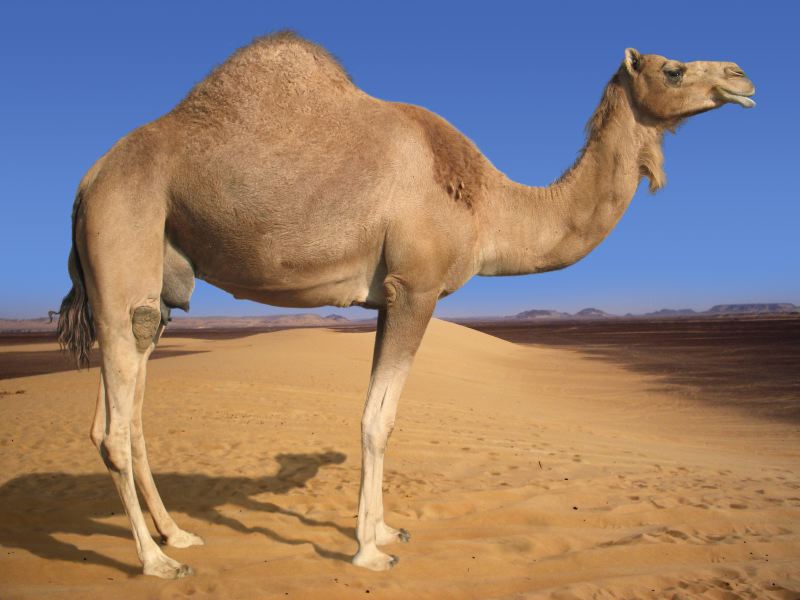
There are different types of deserts, and I chose the hot and dry one. Deserts characteristics vary throughout the world. They can receive less than 1.5cm of rain a year, and the extreme temperatures can range from 45 degrees Celsius, to -18 degrees Celsius.Usually it is 20-25 degrees Celsius though. The camel and the antelope have a commensalism relationship.
Click Here for camel
Click Here for antelope
Click Here for camel
Click Here for antelope

# posted by : Fri May 16, 08:54:00 PM
: Fri May 16, 08:54:00 PM
hey its tink! forgot my password again.
Grasslands are rolling areas of grasses and flowers.The average rainfall is enough to support the grasses and afew tress. The soil is norally to thin and dry for it s=to support many trees. in the winter they can have temperatures as low as -40 and as high as 70 in th summer.
When it comes to mutualism an example is the african bird called the honey guide and the honey badger. The honey guide "guides" the honey badger to the hives where the badger opens the hive and feeds on the honey while the honey guide feeds on the bee larvae and pupae. Both animals gain food from this action.
honey guide and honey badger
look at the bottom of the site for the pic
Grasslands are rolling areas of grasses and flowers.The average rainfall is enough to support the grasses and afew tress. The soil is norally to thin and dry for it s=to support many trees. in the winter they can have temperatures as low as -40 and as high as 70 in th summer.
When it comes to mutualism an example is the african bird called the honey guide and the honey badger. The honey guide "guides" the honey badger to the hives where the badger opens the hive and feeds on the honey while the honey guide feeds on the bee larvae and pupae. Both animals gain food from this action.
honey guide and honey badger
look at the bottom of the site for the pic
# posted by : Fri May 16, 08:58:00 PM
: Fri May 16, 08:58:00 PM
Deserts are very hot and dry, receiving only 50 cm of rain each year. Although deserts are not thought of as common, they surprisingly cover 1/5 of the Earth's surface. Average temperatures reach about 25 degrees celsius or 77 degrees farenheit, with a high of 120 degrees farenheit and a low of -18 degrees celcius which in farenheit is just under 0 degrees. I chose the organisms cycad and cyanobacteria. The cyanobacteria lives in the cycad and in return, the cyanobacteria provides more nutrients for the cycad. Because both organisms are benefitting, it is a mutual or symbiotic relationship.
# posted by : Fri May 16, 11:56:00 PM
: Fri May 16, 11:56:00 PM
Hey Mr. Johnson,
I could not figure out how to link two websites to one entry so here is my other website.
I could not figure out how to link two websites to one entry so here is my other website.
# posted by : Fri May 16, 11:57:00 PM
: Fri May 16, 11:57:00 PM
my biome is a desert. it has lots of sand and very little water. it contains cactuses which are basically the only plants that can survive. the are rhinos in some deserts where that are finches that clean the bugs of off the rhino and in the process feed themselves. this is a symbiotic relationship.Click Here

# posted by : Thu Jun 05, 08:00:00 PM
: Thu Jun 05, 08:00:00 PM
The Tropical Rainforest biome is found mostly around the equator. It includes portions of South and Central America, Central Asia, Australia, and Africa. It has extremely humid conditions with temperatures around 25 degrees Celsius all year, and about 200cm of rainfall per year. Because of this, there is great amounts of wildlife and plant growth, some of which forms the giant canopy rainforests are known for.
Sloths and algae are animals that have a mutualism relationship. Sloth hairs are grooved, which allows algae to easily take hold and grow on the sloth's fur. This camouflages the sloth and allows the algae to get closer to the sunlight. Both animals benefit from this interaction.
Sloth
Algae
Sloths and algae are animals that have a mutualism relationship. Sloth hairs are grooved, which allows algae to easily take hold and grow on the sloth's fur. This camouflages the sloth and allows the algae to get closer to the sunlight. Both animals benefit from this interaction.
Sloth
Algae
# posted by : Sun Jun 15, 06:50:00 PM
: Sun Jun 15, 06:50:00 PM
that was my bad i accidently did rainforest didnt read the top thing clearly
Tundras comes from the Finnish word tunturia aka barren land. The average temperature is -18 F and can go all the way down to -95 F. The Tundra is the earth's coldest Biodome. . Only about 6-10 inches of rain fall each year
Crabs and anemones form Commensalism relationships.
The crab gets food from the tentacles of an anemone.
Crabs
Anemones
Post a Comment
Tundras comes from the Finnish word tunturia aka barren land. The average temperature is -18 F and can go all the way down to -95 F. The Tundra is the earth's coldest Biodome. . Only about 6-10 inches of rain fall each year
Crabs and anemones form Commensalism relationships.
The crab gets food from the tentacles of an anemone.
Crabs
Anemones
# posted by : Sun Jun 15, 06:53:00 PM
: Sun Jun 15, 06:53:00 PM << Home
